
JURISDICTION OF CO-OPERATIVE COURT AND BINDING NATURE OF SOCIETY RESOLUTIONS
Let us first see what is TDR?
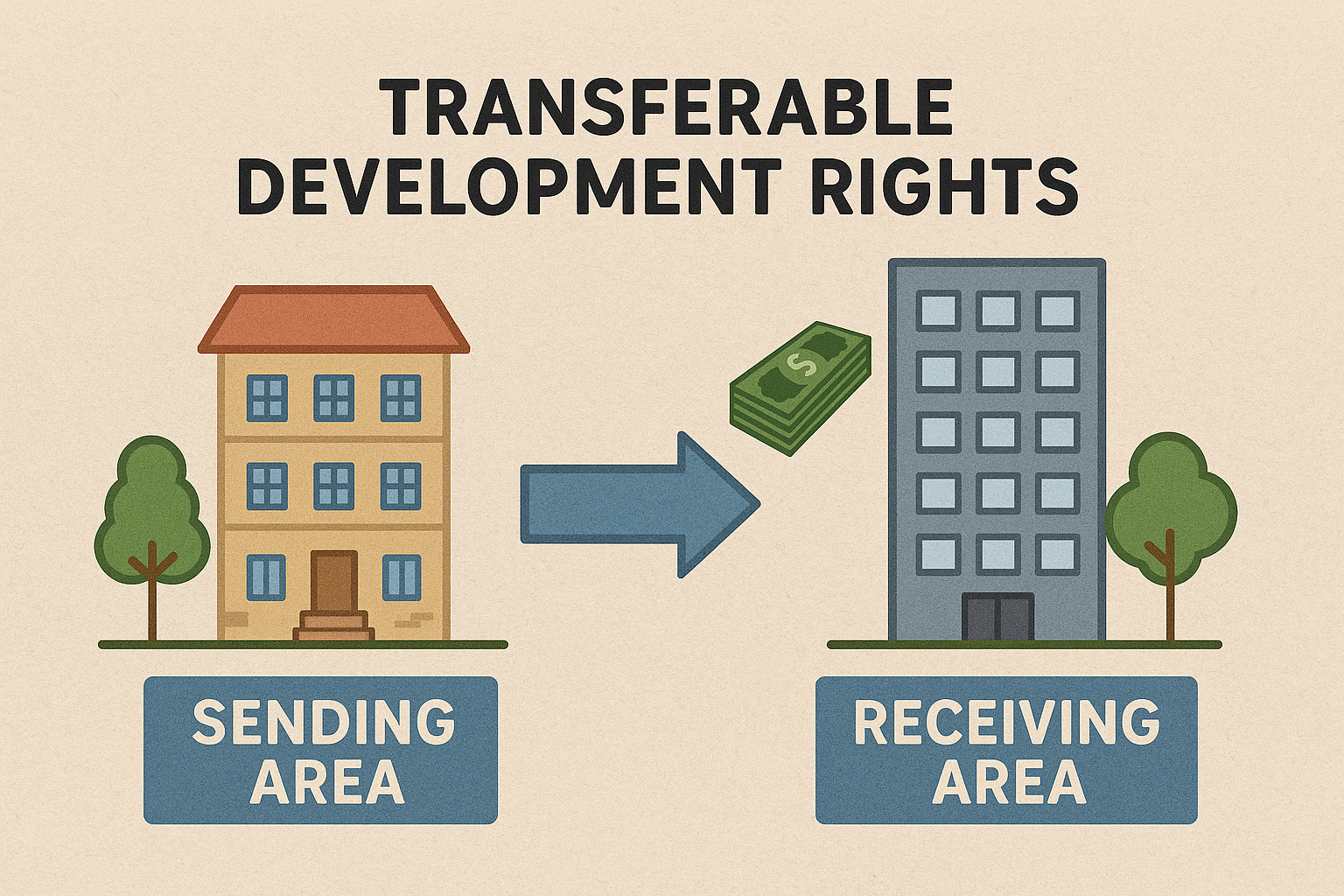
Transferring Development Rights (TDR) by a housing society involves the society, as a landowner, generating extra buildable area (TDR) by surrendering land for public use (like roads, parks) to the municipality, receiving a TDR certificate (or Development Right Certificate – DRC), and then selling these rights to a developer or another party to build more than standard Floor Space Index (FSI) allows, benefiting both the society (compensation for land) and the buyer (extra construction rights). This process helps fund infrastructure projects and allows societies to get value for reserved plots, making TDR a crucial tool in urban development, especially in places like Mumbai.
How it Works for a Society:
- Land Surrender: The housing society owns land, often designated for public amenities (e.g., a playground, road widening) by the city.
- TDR Generation: Instead of cash compensation, the Municipal Corporation (like MCGM in Mumbai) issues a TDR certificate (DRC) to the society, representing the Floor Space Index (FSI) potential of the surrendered land.
- Selling the Rights: The society can then sell this certificate to a builder or another property owner.
- Utilisation: The buyer uses the TDR to construct additional built-up area on their own plot, exceeding the normal FSI limits, often in a designated “receiving zone”.
Benefits of TDR for Societies
- Financial Compensation: Provides funds for the society (often through developers) without the government paying cash, allowing land acquisition for public projects.
- Development Incentive: Encourages development and helps resolve land reservations, as owners get value for undevelopable land.
- Legal Avenue: Offers a way for societies and trusts to utilize or sell their development potential
POINT OF CAUTION:
A Housing Society cannot legally sell Transferable Development Rights (TDR) to a private member using only a Memorandum of Understanding (MoU) and Resolutions. TDR transactions must follow a formal, regulated process involving proper documentation and approval from the competent authorities to be legally valid.
Legal Requirements for TDR Transfer :
- TDR is a formal legal instrument: TDR is an official development right issued by a municipal authority as a Development Right Certificate (DRC). This certificate is a tradeable commodity, similar to a stock, in a formal market.
- Formal Agreements are Required: Any transaction involving the sale or transfer of TDR requires a registered agreement, such as a formal TDR Sale Agreement, not just an MoU or simple resolutions. The agreement must be registered under the Registration Act, 1908.
- Statutory Compliance and Oversight: The transaction must comply with the relevant state laws, such as the Maharashtra Regional and Town Planning (MRTP) Act, 1966, and local Development Control Regulations (DCRs).
- Regulatory Approvals: The transfer must be registered with the Sub-Registrar and updated on the relevant municipal or urban local body’s (ULB) online TDR portal (if available). Authorities track the chain of ownership and usage of TDRs to prevent misuse and ensure transparency.
- Transparency and Fair Value: Transactions by a housing society, especially those involving a private member, are subject to scrutiny to ensure the society receives fair market value and to prevent irregularities or fraud.
Risks of Using Only an MoU and Resolutions
Using only an MoU and resolutions for a TDR sale is highly irregular and carries significant risks:
- Lack of Legal Standing: An MoU may not be a legally binding document for the transfer of a substantial asset like TDR rights, especially if it bypasses statutory requirements.
- Disputes and Litigation: Such informal arrangements are highly susceptible to future legal challenges by other members, the society management, or regulatory bodies.
- Regulatory Action: The relevant government departments or co-operative society registrar can order inquiries into irregular TDR sale transactions, potentially leading to the cancellation of the agreement.
JUDGMENTS AND OBITER:
In 2025, a legal battle emerged between Green Garden Apartments Co-operative Housing Society (CHS) Ltd. Vs. Nitin Chaudhari, the society’s chairman. COMMERCIAL SUIT (L) NO. 5307 OF 2025
The Allegation: A whistleblower (Gaurav Chopra) alleged a ₹46 crore scam involving the sale of Transferable Development Rights (TDR).Fraud, forgery and embezzlement were the allegations.
TDR was made available to the society and was sold under registered MoU and Agreements. There were resolutions passed.
Plaintiff Submission: Plaintiff has submitted that the impugned Agreements for Sale of TDR executed without lawful authority. The Agreements are unregistered and therefore not binding on Society.
That sale of TDR has taken place with the authority of general body and case does not involve surreptitious sale of TDR. He would take me through minutes of the managing committee meetings held to demonstrate acquisition of knowledge by managing committee members of sale of TDR. That said managing committee were party to all the decisions. He would submit that real intention of filing the Suit is to seek immunity for managing committee members (except Defendants) in respect of transaction of sale of TDR. Objection to the manner in which sale proceeds of TDR were utilised and had never questioned the transaction of sale. He would therefore submit that since the transaction of sale of TDR has taken place with full knowledge of all the managing committee members as well as general body, no interference is warranted in the impugned agreements for sale of TDR
Held:
If it is proved that the TDR ought to have been sold at higher price or that Society has suffered any losses, recovery of such losses can be undertaken in an enquiry under Section 88 of the MCS Act. Therefore, there is no question of Society suffering any irreparable loss by reason of refusal of temporary injunction
- Court Rulings: In October 2025, the Bombay High Court rejected an interim application from the society seeking a temporary injunction against purchasers, stating that “inadequacy of consideration” is not a ground for setting aside a valid sale of TDR.
Locations and Context
Green Garden Apartment: A residential complex located in Chembur
In yet another case of Smita Patel and ors vs Dr Harshad Pandya and ors
Facts :
The relevant facts leading to the filing of this writ petition are as follows. The original disputant, late Dr. Harshad Pandya, was a founder member of the society and owner of Flat No.B-4. After his death during the pendency of the dispute, his legal heirs were brought on record as disputants. The society owns two buildings, “A” Wing and “B” Wing, comprising 16 and 20 flats respectively, having 30 members in all. In 1977, the Municipal Corporation of Greater Mumbai acquired a portion of the society’s land. In lieu of the setback area used, the Corporation granted additional FSI of 1500 sq. ft. to the society. The society held meetings to consider the use of this FSI. In the Annual General Meeting held on 10 June 1988, the society resolved to utilize the FSI for constructing a bungalow within the society’s premises. By notice dated 15 March 1988, the office bearers invited tenders with an earnest deposit of Rs.5,000 to be submitted by 1 April 1988. Both members and outsiders submitted tenders. The managing committee opened the tenders on 24 April 1988. The deceased disputant was the highest bidder and his earnest deposit was retained. Subsequently, in the meeting held on 8 January 1989, it was resolved that construction of a private bungalow would reduce open space and limit FSI utilization. Hence, the managing committee decided to allow the disputant to construct additional premises atop Building “B”. Later, on advice from the Architect that such extension would be costly, it was agreed that the disputant would pay Rs.7,00,000 towards allotment of the additional FSI of 1500 sq. ft.
Held :
Co-operative Court Jurisdiction: Disputes concerning the utilization of Floor Space Index (FSI) and TDR in a housing society’s redevelopment, which arise from the society’s bye-laws and general body decisions, fall under the jurisdiction of the Co-operative Court as they “touch the business of the society”.
- Binding Resolutions and Estoppel: The court held that once a housing society member acts upon the society’s resolutions (e.g., in a redevelopment agreement), the society cannot later retract or unilaterally withdraw those conferred rights. The doctrine of promissory estoppel was invoked to enforce the agreements.
- Status Quo Violations: The judgment reinforced that any actions, such as passing resolutions that violate existing court-ordered status quos, are void and unenforceable.
- Enforcement of MoUs: The High Court affirmed that Memorandums of Understanding (MoUs) and resolutions lawfully executed for redevelopment are binding, and the society must implement them.
- Location – Khar -Santacruz
Final Comments
This ruling of Smita Patel has significant implications for housing societies across Maharashtra, providing clarity on the appropriate legal forums for redevelopment-related conflicts and emphasizing the binding nature of valid society decisions regarding TDR and FSI utilization
SHRUTI DESAI
13th January 2026


Post a comment