

In the model bye-laws of a cooperative housing society (such as those in Maharashtra), a member is deemed to have ceased membership if their whereabouts are unknown for a continuous period of seven years and their shares and interest in the property are unclaimed by anyone else. This cessation allows the society to take further action regarding the property.
Procedures and Provisions
While specific actions for handling the property itself require legal procedures beyond just the society’s internal rules, the bye-laws provide a framework for managing the situation and ultimately dealing with the ownership:
- Cessation of Membership: Bye-law No. 55(f) (in the Maharashtra Model Bye-laws) explicitly states that a person shall cease to be a member if their whereabouts are not known for seven continuous years and no claim is made on their interest in the property.
- However, the associate member shall not cease to be Associate Member when the First Member ceases to be the member of the society if Associate Member holds title and interest in the property jointly with the member.
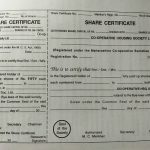
The Committee shall take further action in the matter as indicated in the Bye-law No. 62. - Vesting of Shares/Interest: If, after a member’s death or disappearance, there is no claimant (nominee, heir, or legal representative), their shares and interest in the capital/property of the society will vest in the society itself.
- Nominations and Legal Heirs: The bye-laws heavily emphasize the importance of nomination (Bye-law No. 32-34). If an owner is untraceable and has no nominee, the committee would typically ask for a legal representative or heir to come forward.
- Payment of Dues: The untraceable owner’s account would likely accumulate unpaid maintenance charges and other dues, incurring interest (up to 21% per annum in some model bye-laws). These liabilities must typically be cleared before any transfer of interest can occur.
- Formal Communication: The society uses formal communication methods, such as registered post to the last known address or displaying notices on the society’s notice board, which are considered valid service of notice even if the member is untraceable. The society must maintain records of all sent notices as proof.
- Committee Action: The managing committee has the power to manage the society’s affairs (Bye-law No. 111), which includes dealing with non-compliance and cessation of membership. They are responsible for initiating the process of addressing the untraceable owner’s status.
- Registrar and Courts: The final authority in serious disputes or complex situations, such as an untraceable owner with no clear legal path forward, ultimately lies with the Registrar of Cooperative Societies or a Cooperative Court. The society would likely need to approach these legal bodies for formal orders to take control of or dispose of the property.
DISCUSSION:
A is member and have signed Conveyance.
A is not traceable for more than 40 years.
Taking advantage of situation widow of promoter applies for membership. It was rejected. During course of arguments she sell the flat. After two decades the flat goes for redevelopment. The purchaser of the flat sells flat to the third party. Society refuses all a membership,
In a recent ruling of Supreme Court of India K, Gopi vs Registrar 2025 SCC OnLine SC 740 it is held that , “The registering officer is not concerned with the title held by the executant. He has no adjudicatory power to decide whether the executant has any title. Even if an executant executes a sale deed or a lease in respect of a land in respect of which he has no title, the registering officer cannot refuse to register the document if all the procedural compliances are made and the necessary stamp duty as well as registration charges/fee are paid. We may note here that under the
scheme of the 1908 Act, it is not the function of the Sub-Registrar or Registering Authority to ascertain whether the vendor has title to the property which he is seeking to transfer. Once the registering authority is satisfied that the parties to the document are present before him and the parties admit execution thereof before him, subject to making procedural compliances as narrated above, the document must be registered. The execution and registration of a document have the effect of transferring only those rights, if any, that the executant possesses. If the executant has no right, title, or interest in the property, the registered document cannot effect any transfer.”
Summary:
In essence, while the bye-laws define when membership ceases, the society cannot unilaterally take possession or sell the flat without a formal, legal process involving statutory authorities and the courts, ensuring all legal avenues for the owner or their heirs have been exhausted.
There is also rule of Escheat: where the property goes to the government.
In case the member has left India and has gone to Pakistan than it becomes enemy property
Shruti Desai
9th January 2026
Post a comment