
LIVE IN RELATIONSHIPS AND RELATIONSHIP IN THE NATURE OF MARRIAGE
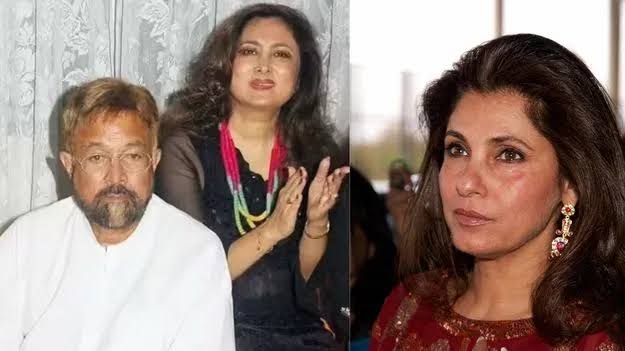
ANITA ADVANI AND RAJESH KHANNA
The case raises an important question.
When can a live in relationship be treated as a relationship in the nature of marriage under Indian law
Supreme Court’s recent decision concerning the relationship between Anita Advani and Rajesh Khanna.
The Supreme Court’s recent dismissal of a plea seeking recognition of Anita Advani’s relationship with late actor Rajesh Khanna as a marriage brings renewed attention to an important area of Indian family law.
The distinction is significant because Indian law recognises that certain relationships outside formal marriage may receive statutory protection. At the same time a live in relationship does not automatically acquire the legal status of marriage.
Background of the case
Anita Advani claimed that she had been in a long term relationship with Rajesh Khanna and sought legal recognition of that relationship along with other reliefs arising from her alleged eviction from his residence.
The claim faced a significant legal difficulty because Rajesh Khanna remained legally married to Dimple Kapadia although they had reportedly been living separately for many years.
The Bombay High Court declined to recognise the relationship as a relationship in the nature of marriage. The Supreme Court has now declined to interfere with that decision.
The decision is important not merely because of the persons involved but because it illustrates the legal limits surrounding recognition of non marital relationships.
A live in relationship is not automatically a marriage
The Protection of Women from Domestic Violence Act 2005 provides protection to a woman who is or has been in a relationship in the nature of marriage with the respondent.
However, this does not mean that every live in relationship will qualify.
In D Velusamy versus D Patchaiammal decided in 2010 the Supreme Court explained that a relationship in the nature of marriage must possess certain characteristics of a marital relationship.
Relevant factors include the duration of the relationship whether the parties lived together in a shared household whether they represented themselves to society as spouses the nature of their domestic arrangements and whether the parties were legally capable of entering into a marriage.
The Court made it clear that merely living together having a sexual relationship or maintaining a relationship for a limited period does not automatically establish a relationship in the nature of marriage.
The importance of being legally capable of marriage
One of the important aspects of the Velusamy judgment is the requirement that the parties should be legally capable of entering into a marriage.
This becomes particularly relevant when one party is already married.
A relationship involving a person whose existing marriage has not been legally dissolved cannot simply be treated as equivalent to a valid marriage merely because the parties have lived together for a considerable period.
This does not mean that a woman involved with a married man necessarily has no legal remedy. The availability of protection under the Domestic Violence Act must be examined in accordance with the facts of each case and the applicable law.
The Indra Sarma decision
The Supreme Court subsequently examined the issue in greater detail in Indra Sarma versus V K V Sarma in 2013.
The Court recognised that relationships outside marriage can take different forms and that not every such relationship should be treated in the same manner.
The Court considered several factors including the duration of the relationship the conduct of the parties whether they lived together whether they maintained a shared household their financial arrangements whether they had children whether they represented themselves as spouses and the overall circumstances surrounding the relationship.
The inquiry is therefore fact specific.
The manner in which the parties conducted themselves may be relevant in determining whether the relationship had the characteristics of a marriage.
Relationship in the nature of marriage is not the same as marriage
This distinction is important.
The Domestic Violence Act does not provide that every qualifying live in relationship becomes a legally valid marriage.
Instead, the legislation provides specific protections and remedies to women who fall within the scope of the legislation.
There is therefore an important distinction between three situations.
First a legally valid marriage which is recognised under the applicable marriage law.
Second a relationship in the nature of marriage which although not a formal marriage may possess sufficient characteristics of a marital relationship to attract protection under the Domestic Violence Act.
Third an ordinary live in relationship which does not satisfy the statutory and judicial requirements for such protection.
These categories should not be treated as interchangeable.
What does the Rajesh Khanna case tellS us?
The decision should not be understood as holding that long-term live-in relationships have no legal significance.
Indian law has recognised that women in certain non-marital domestic relationships may require legal protection. The Domestic Violence Act itself reflects this legislative recognition.
The more limited proposition is that duration alone does not transform a relationship into a marriage or necessarily into a relationship in the nature of marriage.
Where one party has a subsisting marriage with another person the legal position becomes particularly complex.
The Court must therefore examine the statutory requirements and applicable judicial principles rather than simply treating cohabitation as equivalent to marriage.
Practical implications
For persons in live in relationships
Parties should understand that cohabitation does not automatically confer the same legal status as marriage.
Issues relating to property succession maintenance residence financial contributions nominations beneficiaries and domestic violence may be governed by different legal principles.
For women seeking protection
The absence of a marriage certificate does not necessarily mean that a woman has no legal remedy.
Depending upon the facts statutory protection may be available under the Domestic Violence Act. Whether a particular relationship qualifies as a relationship in the nature of marriage requires careful examination of the facts and applicable case law.
For persons who are already married
The legal position becomes more sensitive where a person enters into another domestic relationship while a prior marriage remains legally subsisting.
The existence of a subsisting marriage can have significant consequences when the subsequent relationship is sought to be characterised as a marriage or as a relationship in the nature of marriage.
Conclusion
the Rajesh Khanna case is a reminder of an important principle of Indian family law.
Living together may create legal consequences but living together does not by itself create a marriage.
Indian courts have increasingly recognised the realities of contemporary relationships. However such recognition operates within the boundaries established by legislation and judicial precedent.
The correct legal inquiry is therefore not simply whether two people lived together or for how many years.
The question is whether on the facts of the particular case the relationship satisfies the statutory and judicial requirements for legal protection.
For legal practitioners the case also highlights the continuing importance of distinguishing between marital status cohabitation and a relationship in the nature of marriage. These concepts may overlap factually but they have distinct legal consequences.
Anita made a mistake of not taking any property in her name. Anita did everything for him but Rajesh Kahnna remained loyal to Dimple. Girl/Woman must understand this fact and remain in relationship. Ultimately one has to also think of self dignity which nowadays women seek in legal marriages.
Legal Disclaimer
This newsletter is intended for general informational purposes only and does not constitute legal advice. The application of law depends upon the facts and circumstances of each individual case. Readers should obtain independent legal advice before acting upon the information contained herein.
Shruti Desai
Advocates and Legal Consultants
30th October 2026

Post a comment