

From Demonetisation to Digital Currency: How India Led the Global Shift Toward Sovereign Digital Money
India is a visionary nation. India had a serious problem of terrorism and funding terrorism through fake currency notes. India, to abate terrorism, opted for demonetisation on 8th November 2016. India introduced digital payment platforms simultaneously. We now have Bharat Pay, G Pay and even every bank has started their UPI. India has shown the world the path towards a digital world.
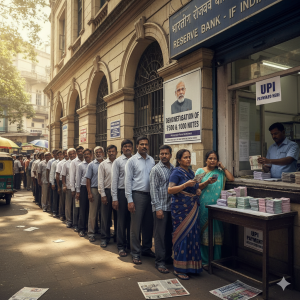
Now, the west side of the globe is following India’s footsteps.
USA PASSES LAW OF REGULATORY FRAMEWORK OF DIGITAL CURRENCY:
The Guiding and Establishing National Innovation for U.S. Stablecoins (GENIUS) Act, signed into law in July 2025, establishes the first comprehensive federal regulatory framework for payment stablecoins in the United States. It mandates 100% reserve backing, strict, liquidity requirements, and brings issuers under Bank Secrecy Act (BSA) compliance.
Key Aspects of the GENIUS Act (2025-2026):
- Purpose: To foster innovation in digital assets while protecting consumers and ensuring financial stability.
- Reserve Requirements: Requires stablecoins to be backed 1:1 by high-quality, liquid assets, such as U.S. dollars or short-term Treasury bills.
- Issuer Regulation: Only permitted issuers can create payment stablecoins; they must adhere to capital and risk management rules.
- Consumer Protection: Guarantees redemption rights for stablecoin holders and mandates public disclosures of reserves.
- Compliance: Subjects issuers to anti-money laundering (AML), countering the financing of terrorism (CFT), and sanction requirements.
- International Scope: Foreign issuers targeting U.S. users are held to the same standards as domestic issuers.
The Treasury Department is actively implementing the law, with public comment periods regarding the regulation of these digital assets extending into late 2025
Overview of U.S. Monetary Evolution
- The U.S. monetary system has undergone major changes, including:
- Early issuance of private bank and Treasury currencies.
- Creation of the Federal Reserve in 1914 as the sole currency issuer.
- Abandonment of gold and silver convertibility after 1933.
- These shifts were controversial decisions and actions but are now widely accepted.
Emergence of Digital Currencies and CBDC Debate
- Private digital currencies (e.g., Bitcoin) and foreign CBDCs have prompted U.S. policy debates.
- A Central Bank Digital Currency (CBDC) is the digital form of a nation’s sovereign currency, issued and regulated by the central bank (e.g., RBI’s “Digital Rupee” or e₹). It acts as legal tender, is interchangeable 1:1 with physical cash, and is designed to make transactions faster, cheaper, and more secure.
- Key Aspects of CBDCs:
- Types: Divided into Retail (CBDC-R) for public use and Wholesale (CBDC-W) for interbank settlements.
- Storage: Held in digital wallets provided by banks, offering 24/7 transactions.
- Global Status: Over 130 countries, representing 98% of global GDP, are exploring or have launched CBDCs, driven by the need for enhanced digital payment efficiency.
- Digital Currency Vs. Crypto: Unlike cryptocurrencies, CBDCs are centralised, backed by the state, and not volatile.
- Goals: Reduce cash-handling costs, improve financial inclusion, and increase cross-border payment efficiency.
- Key questions include:
- Whether the Federal Reserve should issue a CBDC.
- Whether a CBDC would fundamentally change the financial system or simply modernise it.
- USA Congress has held several hearings and proposed multiple CBDC-related bills in recent sessions.
Purpose of the Report
- The report aims to explain:
- What CBDCs are.
- How they might change financial systems.
- Global CBDC developments.
- Possible design options.
- Associated policy issues.
- It begins by reviewing current payment systems and digital currencies.
Current Digital Payment System
- The Federal Reserve issues:
- Paper currency for retail use.
- Bank reserves for wholesale transactions.
- Consumers mainly access money through bank accounts.
Traditional Electronic Payments
- Payments rely on private intermediaries (mainly banks) that:
- Maintain centralized ledgers.
- Validate transactions.
- Transfer funds between accounts.
- Interbank payments use electronic messaging networks.
- Banks are regulated for stability, safety, and consumer protection.
- Central banks manage money supply to preserve value.
Costs and Limitations
- Payment systems require extensive infrastructure and maintenance.
- Some transactions experience delays (e.g., paycheck fund availability).
Private Digital Currencies
Cryptocurrencies
- Examples: Bitcoin, Ethereum, Dogecoin, Litecoin.
- Operate on decentralized, distributed ledgers using blockchain and cryptography.
- Do not rely on centralized intermediaries.
Limitations as Money
- Cryptocurrencies generally fail to meet key money functions:
- Medium of exchange: limited acceptance; not legal tender.
- Store of value: high volatility.
- Unit of account: unstable valuation.
- Cannot be used to pay taxes.
- Lack centralized control to stabilize value.
Stablecoins
- Designed to reduce volatility by pegging value to:
- National currencies (e.g., USD).
- Baskets of currencies or other assets.
- Examples: USD Coin, Tether.
- Potentially more useful than volatile cryptocurrencies for payments and savings.
Key Takeaways
- The U.S. payment system is primarily bank-based and centrally regulated.
- Digital currencies have sparked debate but have limited use as money.
- CBDCs are being considered as a possible evolution of existing systems.
- Stablecoins attempt to bridge the gap between traditional money and cryptocurrencies.
SUMMARY INDIA VS USA
In India, the Digital Rupee (e₹) pilot is ongoing, involving major banks and testing both retail and wholesale use cases. The Western world is far behind.
- India’s Vision: Driven by the need to combat “black money” and terrorism (demonetisation), India leapfrogged traditional systems to become a global leader in real-time digital payments.
- The U.S. Response: After years of observation, the GENIUS Act (2025) marks the end of the unregulated stablecoin era. By requiring 1:1 reserves and BSA compliance, the U.S. is essentially “banking” the digital asset space to protect its financial hegemony.
Current Status
While the U.S. Treasury is still in the “public comment” and regulatory implementation phase, India’s RBI is already actively testing the e₹ in the real world. For further updates on the U.S. stance, you can monitor the Federal Reserve’s official statements on CBDCs or track global progress via the Atlantic Council CBDC Tracker.
The West is indeed following the path India paved, moving toward a future where “money” is no longer a physical object, but a secure, instantaneous digital claim on the state.
SHRUTI DESAI
10th February 2026


Post a comment